Charity Tuseko Muwowo Sindano is a seasoned Water, Sanitation and Hygiene (WASH) professional with 16+ years of experience across the USA, UK and Africa. She has spearheaded water management energy efficiency efforts in the USA. She previously led systems strengthening efforts, ensured continuity of water services during COVID-19 for over 6 million people and co-led national strategy development in Zambia. An alumna of UNICEF’s Female Talent Initiative, she holds an MSc in Accounting with Finance from London South Bank’s Business School. Her work bridges the gap between theoretical policy and practical, on-the-ground solutions for water decision-makers and practitioners. In today’s feature, she uses Zambia as a lens to explore how energy and water are inextricably linked in the face of a changing climate. She writes in her personal capacity, and the views expressed are her own.
Introduction
Water needs energy and energy needs water (International Energy Agency, 2016). This article explores the interlinkage between water and energy in various settings. Water is considered a common-pool resource (Ostrom, 1990) and is needed by human beings and other living things for survival. Energy services provide “heating, cooling, lighting and other household and industrial uses”, that support human wellbeing and survival such as treating water for drinking, and powering healthcare facilities (United Nations General Assembly, 2015). Sustainable Development Goals (SDG) that are directly relevant to water and energy are goal 6 on clean water and sanitation and goal 7 on affordable and clean energy (UNGA, 2015). This article uses Zambia as a case study to explore and draw lessons from the inter-relatedness between water and energy.
Water Stress, Water Security and Access
SDG Indicator 6.4.2, which tracks global levels of water stress, compares the amount of freshwater withdrawn for economic activities with the total available renewable freshwater resources (UNGA, 2015). According to Ritchie and Roser in our World in Data 2021 which highlights global data on water use and water stress, Zambia’s annual freshwater (surface and ground water) withdrawals for various uses such as agriculture, industry and domestic, stand at 1.57 billion cubic meters and renewable internal freshwater resources per person per year stand at 4,091 cubic meters (Ritchie and Roser, 2018). The Food and Agriculture Organization (FAO) of the United Nations calculates water stress as “the ratio between total freshwater withdrawn (TFWW) by all major sectors and total renewable freshwater resources (TRWR), after considering environmental flow requirements (EFR).” Values below 25 percent indicate no water stress whereas those between 75 percent and 100 percent have high water stress. According to the FAO definition, Zambia, at 2.84 percent, has no water stress (FAO and UN-Water, 2021, p. 9; FAO and UN-Water, 2024).
However, a country with no water stress can experience water insecurity. Water security is defined as “the availability of an acceptable quantity and quality of water for health, livelihoods, ecosystems and production, coupled with an acceptable level of water-related risks to people, environments and economies” (Grey and Sadoff, 2007). For a country to be water secure, it requires the infrastructure, financial resources and capacity to abstract, treat and distribute water for its various uses in the country. According to the World Health Organization (WHO) and United Nations Children’s Fund (UNICEF) Joint Monitoring Programme (JMP) report 2024, 73 percent of Zambia’s population has access to basic drinking water services (WHO and UNICEF, 2024). Further, 58 percent of the rural population and 40 percent of the urban population has access to basic water services while half of the urban population has access to safely managed water services.
Energy Situation
SDG Target 7.1 which is to “ensure that universal access to affordable, reliable and modern energy services” (UNGA, 2015) is indirectly linked to water and wastewater services because the energy made available through electricity and other sources, is also made available to water and wastewater utilities (WWUs). WWUs are heavily reliant on energy for their water and wastewater treatment processes. In Hamilton et al’s scholarship on the US water and wastewater industry, they noted that energy is one of the highest operating costs in water and wastewater treatment systems, second only to labor, and accounting for about 30 – 40 percent of water system operational costs in an average water supply utility and 25 – 40 percent of wastewater system operational costs in an average wastewater utility (Hamilton et al, 2009).
According to Pricewaterhouse Coopers, 84 percent of Zambia’s electricity is generated from hydropower, indicating heavy dependence on hydropower (Pricewaterhouse Coopers, 2024). Further, the National Water Supply and Sanitation Council (NWASCO) annual sector report states that the highest proportion of operation and maintenance costs was attributed to personnel at 53 percent, followed by energy at 26 percent, other cost at 12 percent, chemicals at 6 percent and maintenance at 3 percent, indicating that energy is a high operational cost for the commercial water utilities (CUs) in Zambia. NWASCO further identifies energy efficiency as one of the operational indicators for assessing the “effectiveness and efficiency of a CU in providing water and sanitation services” (NWASCO, 2024, p. 69).
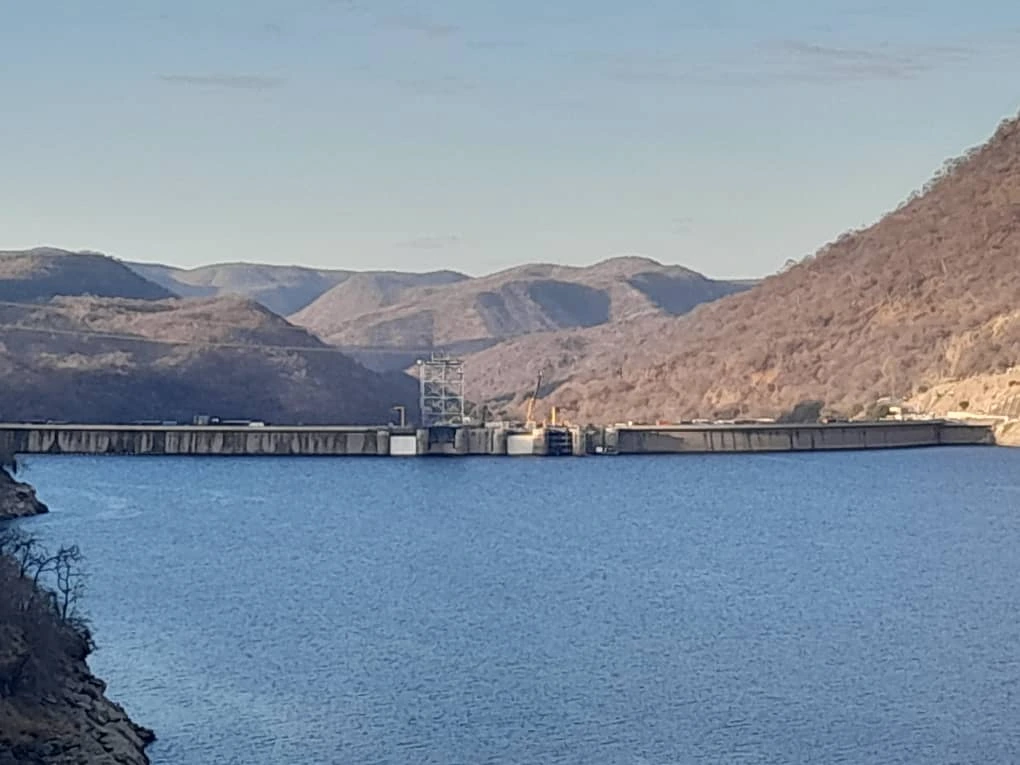
In recent times, Zambia experienced severe power outages or load shedding caused by reduced hydropower production (United Nations Economic Commission for Europe, 2024; Mwape et al, 2025), and reduced water availability for rural communities (Mweemba, van Koppen and Amarnath, 2025) owing to a drought experienced in 2023/ 24 (United Nations Office for the Coordination of Humanitarian Affairs, 2024; Mwape et al, 2025), threatening to erode gains made in previous years. These outages posed an operational challenge to the CUs in their quest to remain compliant with regulation and provide water services to the peri-urban and urban population of the country.
The Meaning of the Water-Energy Nexus Operationally
The interrelationship between water and energy has become more visible with disruptions to reliable service provision due to climate events such as droughts. In water treatment and wastewater treatment plants, energy, mainly electricity, is used to convey the water and wastewater from one process to another, right from pumping it into the plant, all the way to distributing drinking water and discharging treated wastewater from the plant to reach compliance levels (Hamilton et al, 2009).
In water treatment plants, electricity is used in all processes including raw water abstraction (surface or ground water), treatment processes, and distribution (Hamilton et al, 2009; CDC, 2024). Finished water pumping uses the most electricity in the facility (Hamilton et al, 2009). On the other hand, in wastewater treatment plants, electricity is used for preliminary treatment, primary treatment, secondary treatment, tertiary treatment, and sludge treatment, though some utilities use natural gas for the digestion process (Hamilton et al, 2009; Nathanson and Ambulkar, 2025).
Considering the amount of electricity used in water and wastewater treatment processes, water utilities explore ways of managing their energy better, by getting more efficient, optimizing processes, and using alternative sources of energy. “Improving energy efficiency (EE) is at the core of measures to reduce operational cost at water and wastewater utilities (WWUs). Since energy represents the largest controllable operational expenditure of most WWUs, and many EE measures have a payback period of less than five years, investing in EE supports quicker and greater expansion of clean water access for the poor by making the system cheaper to operate” (World Bank, 2012 p.ii).
Sustainability in Practice
WWUs are encouraged to consider water and energy in a holistic way. One approach could be to improve their energy management without compromising compliance and public health. WWUs could do this by assessing their energy use and cost, and developing energy management plans accordingly (World Bank, 2012). The energy management plans could support strategic decision-making and actions. Further, WWUs could also collect and track their energy data at facility and process levels, to have better visibility of operations with high energy use (US Environmental Protection Agency, 2008). The data could strengthen their operational decision-making capacity, by empowering them to intervene appropriately within their facilities. Ultimately, operational costs impact rates, alongside other factors.
Another approach for WWUs could be undertaking process optimization such as replacing and upgrading inefficient equipment or aging equipment nearing the end of its useful life (World Bank, 2012; Limaye and Welsien, 2019). Shifting processes to the electricity provider’s off-peak hours, such as raw water pumping, can lower electricity costs (Limaye and Welsien, 2019). However, this approach could introduce unintended counter effects. During off-peak hours, low water use and increased pumping can raise pressure, which could result in greater water losses and therefore higher energy use. Each WWU could consider solutions such as network sectorization and assess the overall benefit of shifting processes to off-peak hours before doing so (World Bank, 2012).
Further, in alignment with national policy and legislation, water conservation may lower abstraction and therefore reduce pumping from water sources, which in turn could reduce energy use and costs of water treatment, contributing to energy efficiency and sustainability (World Bank, 2012).
Lessons Learned
From the Zambia case, some lessons could be applied globally regarding the water-energy nexus. Energy poverty can impact water availability, and availability of water resources (no or low water stress) does not automatically translate into a country being water secure (Grey and Sadoff, 2007). Water security is not static; it changes with climate variability, infrastructure reliability, and water quality. With water insecurity, the most vulnerable and poor suffer disproportionately as they have the least means to support themselves (UNESCO and UN-Water, 2020). The inter-relatedness of water and energy in water for human development and water resource management is a useful connection to be aware of and to act on as water decision makers and practitioners, as operational savings could reduce the frequency of increased rates for customers (World Bank, 2012). WWUs already have high energy costs, usually second to labor, which are exacerbated by the impacts of climate events like droughts and floods, affecting rural, peri-urban and urban settings. WWUs can explore alternative energy after exploring ‘lower hanging’ energy efficiency and process optimization options within their operations (Hamilton et al, 2009).
Conclusion
The water-energy nexus is more than a theoretical concept with policy-only implications; it has operational implications which, if considered and acted on, could strengthen capacities and efficiencies, as well as inform strategic decision-making. Zambia’s case helps highlight this: Water needs energy and energy needs water (IEA, 2016). This is important because the provision of water for human development, regardless of location, requires energy. This energy costs money which could be saved through intentional operational changes such as energy efficiency measures, ultimately contributing to the achievements of SDGs.
Grey, D. and Sadoff, C.W. (2007). Sink or swim? Water security for growth and development. Water Policy, 9(6), pp. 545-571. https://doi.org/10.2166/wp.2007.021
Hamilton, G., Arzbaecher, C., Ehrhard, R. and Murphy, J. (2009). Driving energy efficiency in the U.S. water and wastewater industry by focusing on operating and maintenance cost reductions. In: ACEEE Summer Study on Energy Efficiency in Industry. Washington, DC: American Council for an Energy-Efficient Economy, pp. 6-30. Available at: https://www.aceee.org/files/proceedings/2009/data/papers/6_83.pdf
Limaye, D. and Welsien, K. (2019). Mainstreaming energy efficiency investments in urban water and wastewater utilities. Water Guidance Note. Washington, DC: World Bank Group. Available at: http://hdl.handle.net/10986/31927
Mwape, A., Hayes, M., Bathke, D.J., Smith, K.H., Mahmood, R. and Jones, E. (2025). Drought management in Zambia: Insights from the 2023/2024 drought. Climate, 13(11), 227. https://doi.org/10.3390/cli13110227
Mweemba, C.E., van Koppen, B. and Amarnath, G. (2025). Community-led polycentric water management for drought mitigation in Southern Zambia. PLOS Water, 4(1), e0000356. https://doi.org/10.1371/journal.pwat.0000356
National Water Supply and Sanitation Council (NWASCO) (2024). Water Supply and Sanitation Sector Report. Lusaka: National Water Supply and Sanitation Council. Available at:
Ostrom, E. (1990). Governing the Commons: The Evolution of Institutions for Collective Action. Cambridge: Cambridge University Press (Political Economy of Institutions and Decisions).
Pricewaterhouse Coopers (PwC) (2024). Generation and Importation of electricity. Available at:
United Nations General Assembly (UNGA) (2015). Transforming our world: the 2030 Agenda for Sustainable Development. New York: United Nations. Available at https://docs.un.org/en/A/RES/70/1
United Nations Office for the Coordination of Humanitarian Affairs (UNOCHA) (2024). Zambia: revised drought flash appeal – May 2024-June 2025 (Revision December 2024). Available at:
World Health Organization (WHO)/ United Nations Children’s Fund (UNICEF) Joint Monitoring Programme (JMP) (2024). Progress on household drinking water, sanitation and hygiene 2000-2024. Available at: https://washdata.org/data/downloads#ZMB